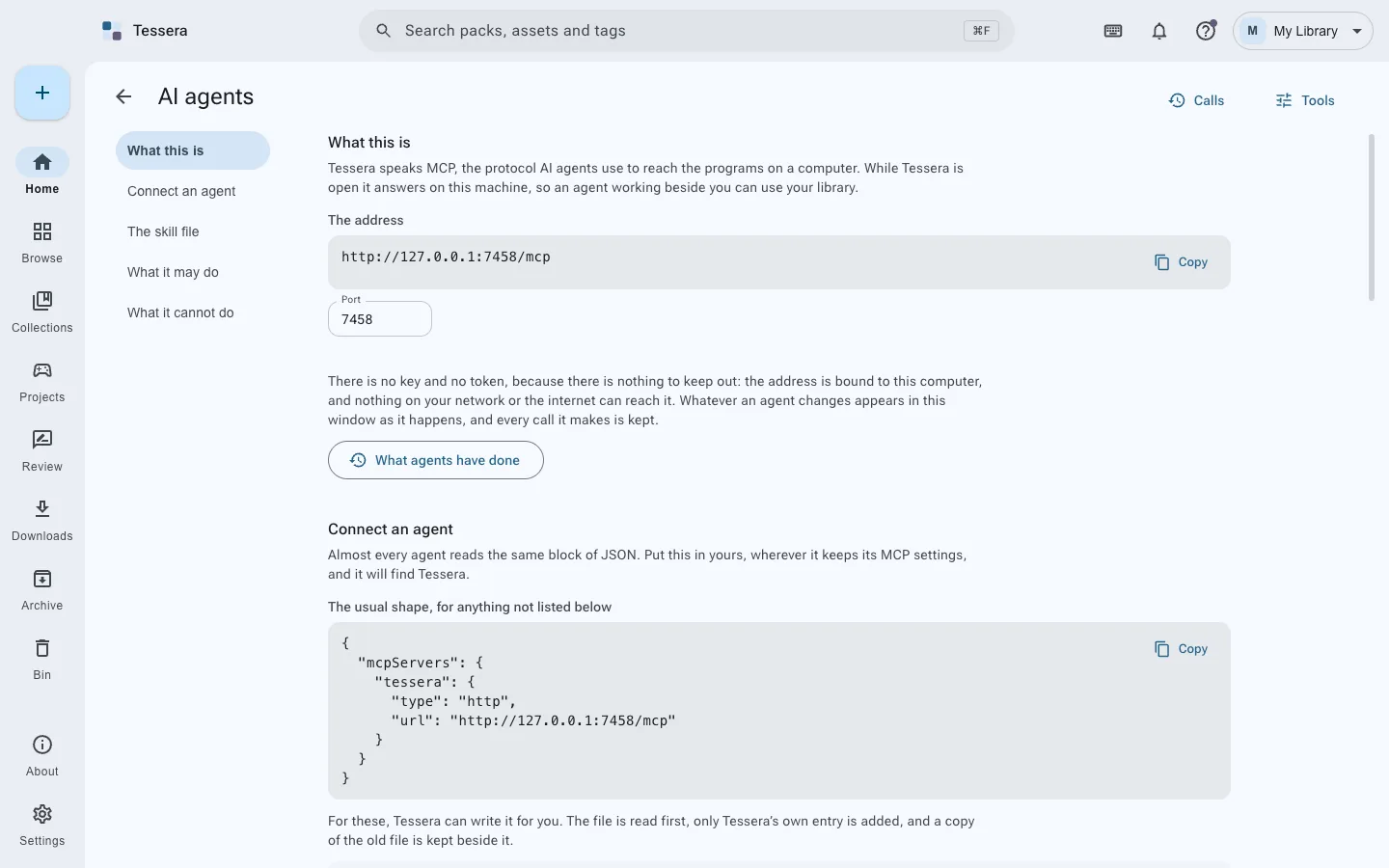
Letting an AI agent into your asset library, carefully
An agent that can see what you own is genuinely useful. One that can delete things is a different proposition. The difference is in how the permissions are drawn.
Writing about assets, licenses, and the parts of making a game that are really filing problems. Follow by RSS
An agent that can see what you own is genuinely useful. One that can delete things is a different proposition. The difference is in how the permissions are drawn.
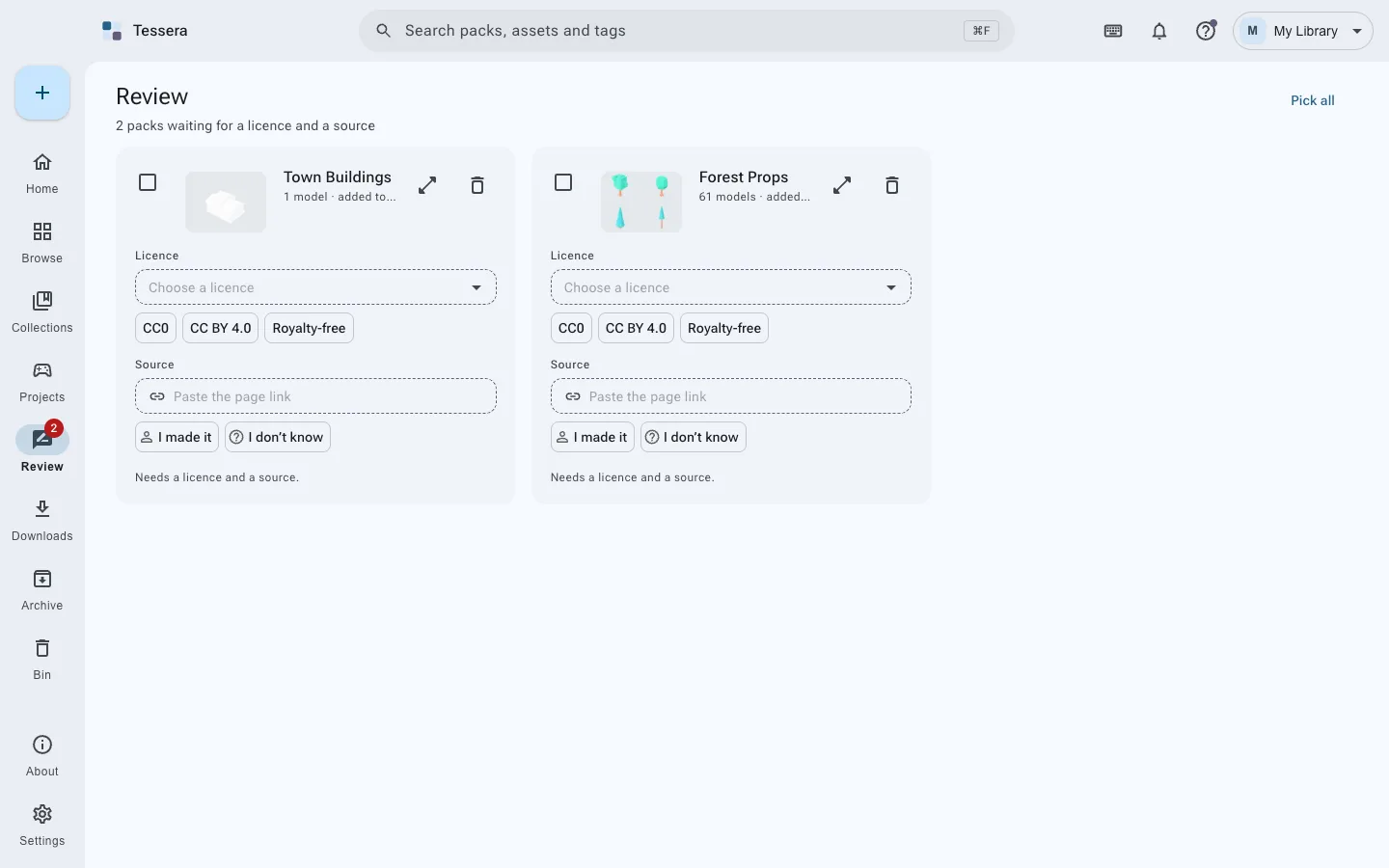
The folder with no readme, the file a friend sent you, the model from a site that no longer exists. None of them are hopeless, and one of them is.
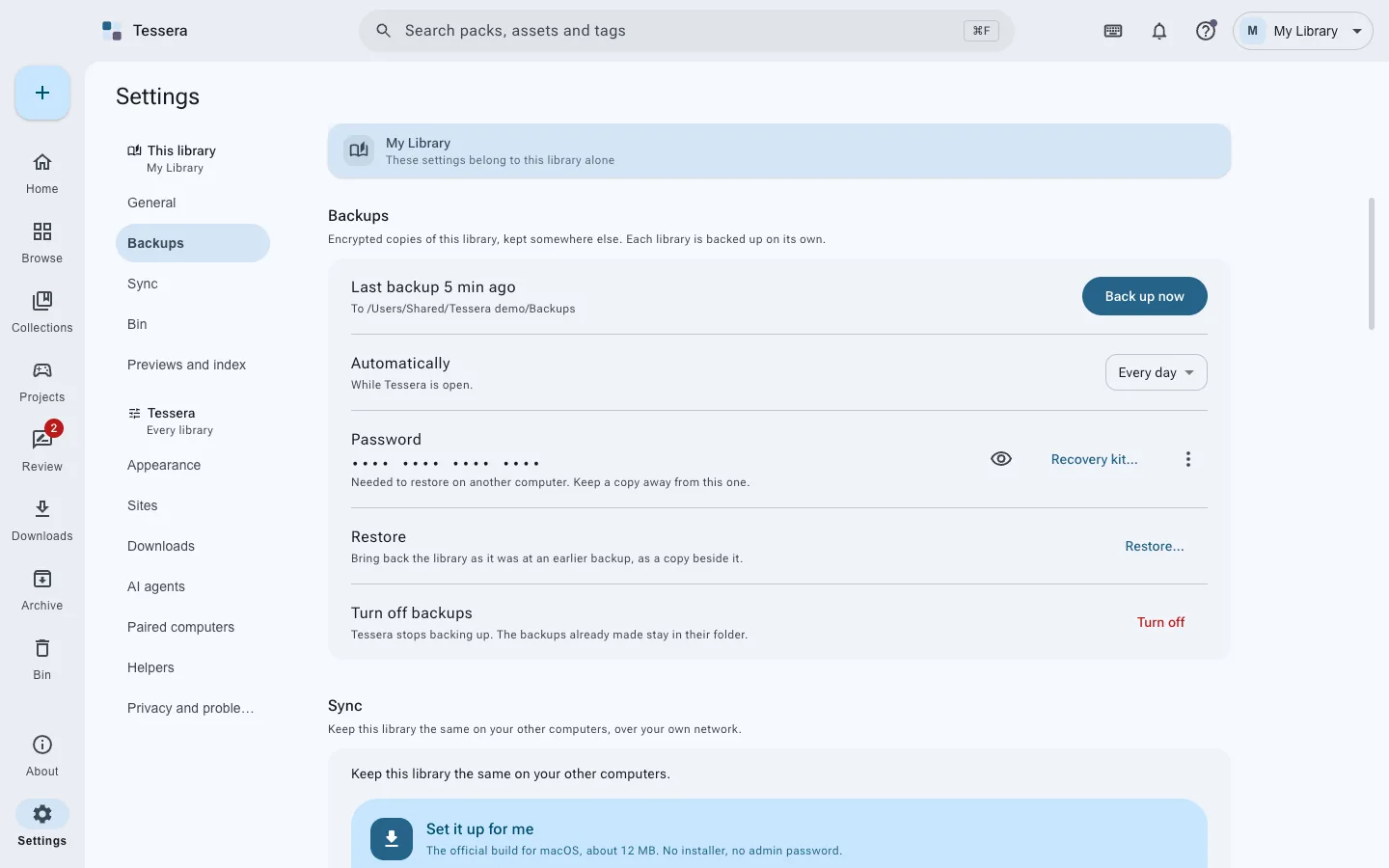
Asset libraries are large, mostly unchanging, and irreplaceable. That combination has a good answer, and it does not involve an account.
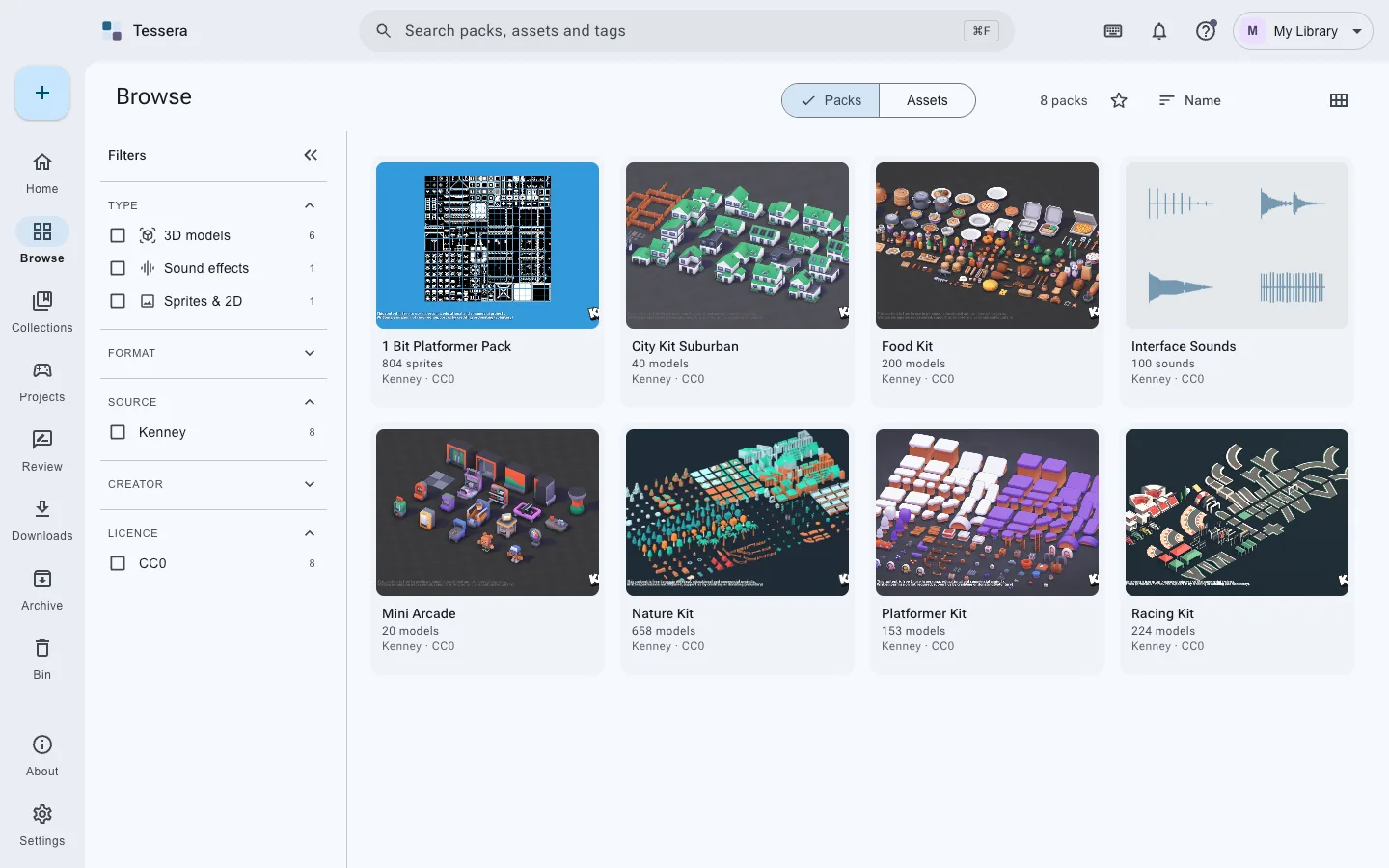
Asset duplication is not carelessness. It is what happens when a folder has to answer three questions at once, and it has real costs.
Where to find them, and the reason a game built from ten different free packs looks like a game built from ten different free packs.
The sites worth knowing for models, which are safely CC0, which need reading per file, and what to record before you close the tab.
Where to get fonts you can embed, what the Open Font License actually asks, and why fonts are the assets most likely to arrive with no record at all.
Where to get them, what resolution you really need, and why the HDRI you pick decides more about how your game looks than any other single asset.
Audio is where non-commercial licenses hide, and where one unchecked file can follow your game onto a store page.
The CC0 libraries worth using, the free tiers that are not as free as they look, and what a complete material actually needs.
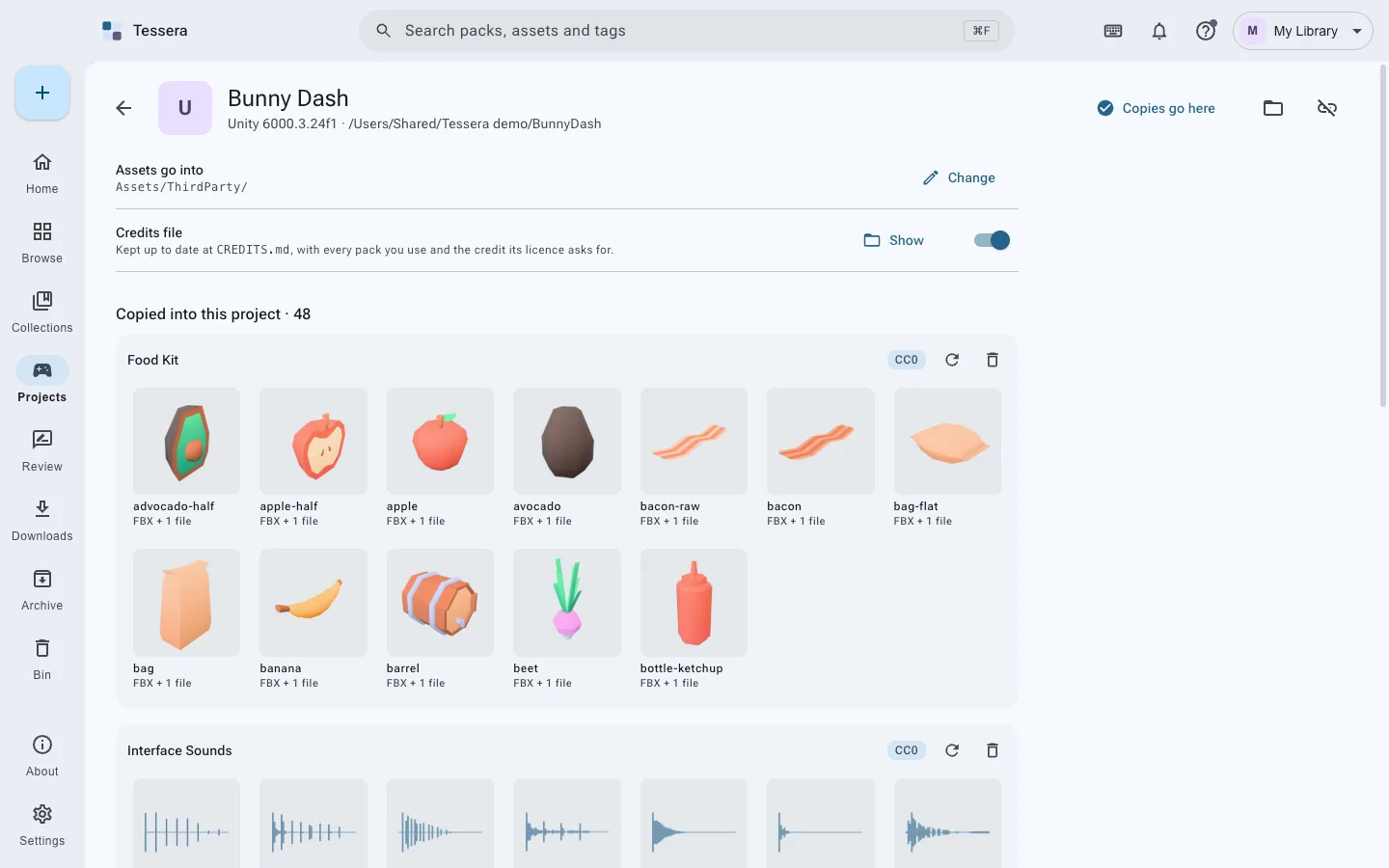
They solve different problems, every engine prefers one, and the right answer for a library is not the right answer for a project.
Every asset folder becomes unsearchable at roughly the same size. Here is what actually goes wrong, and the three ways out.
Most people's libraries are half archives, and an archive is invisible to every search their computer can do. It does not have to be.
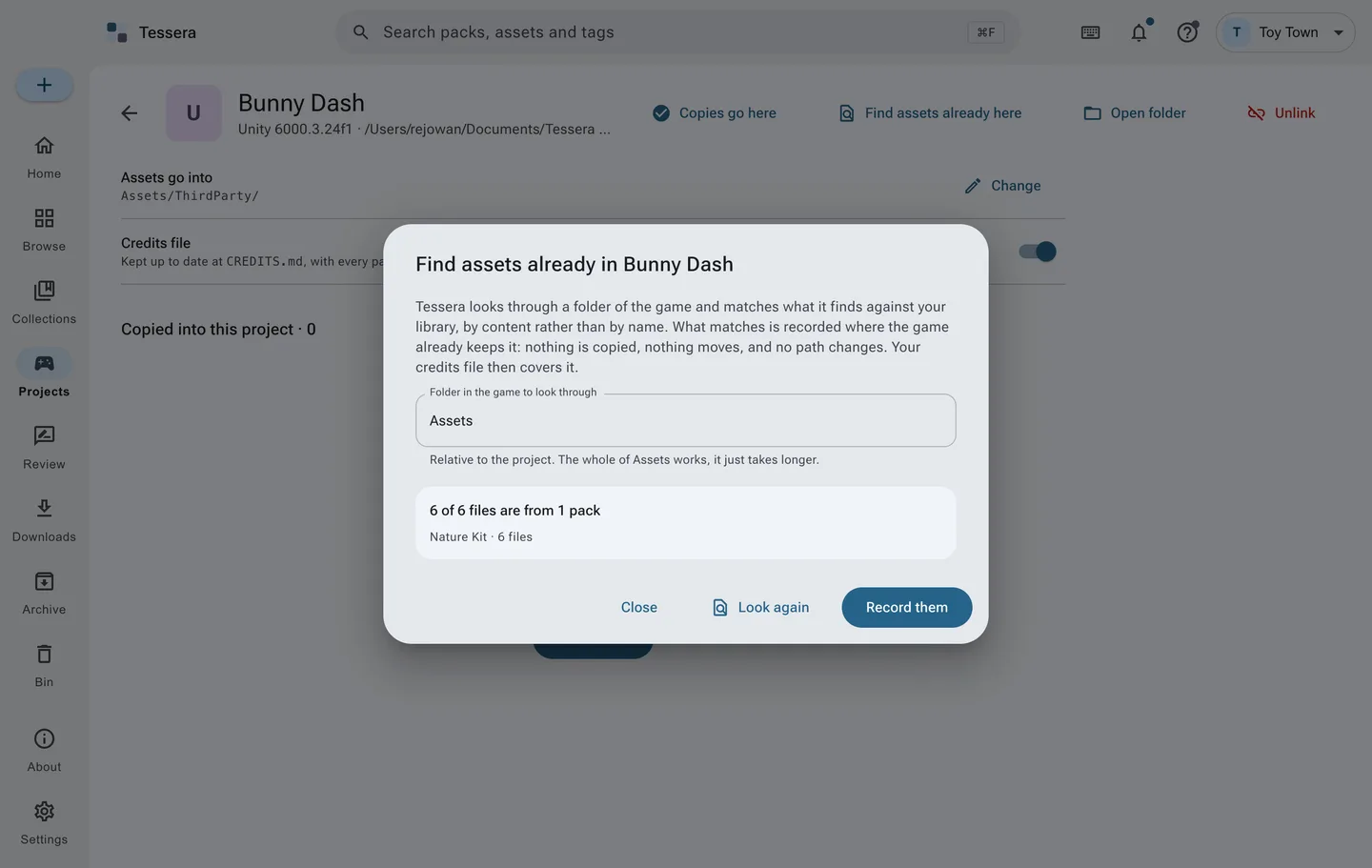
The first hour of a new project is usually spent downloading. It is usually the wrong hour, and you already have more than you think.
Everybody has one. Here is why it stays unopened, and how to make it useful without spending a weekend unzipping things.
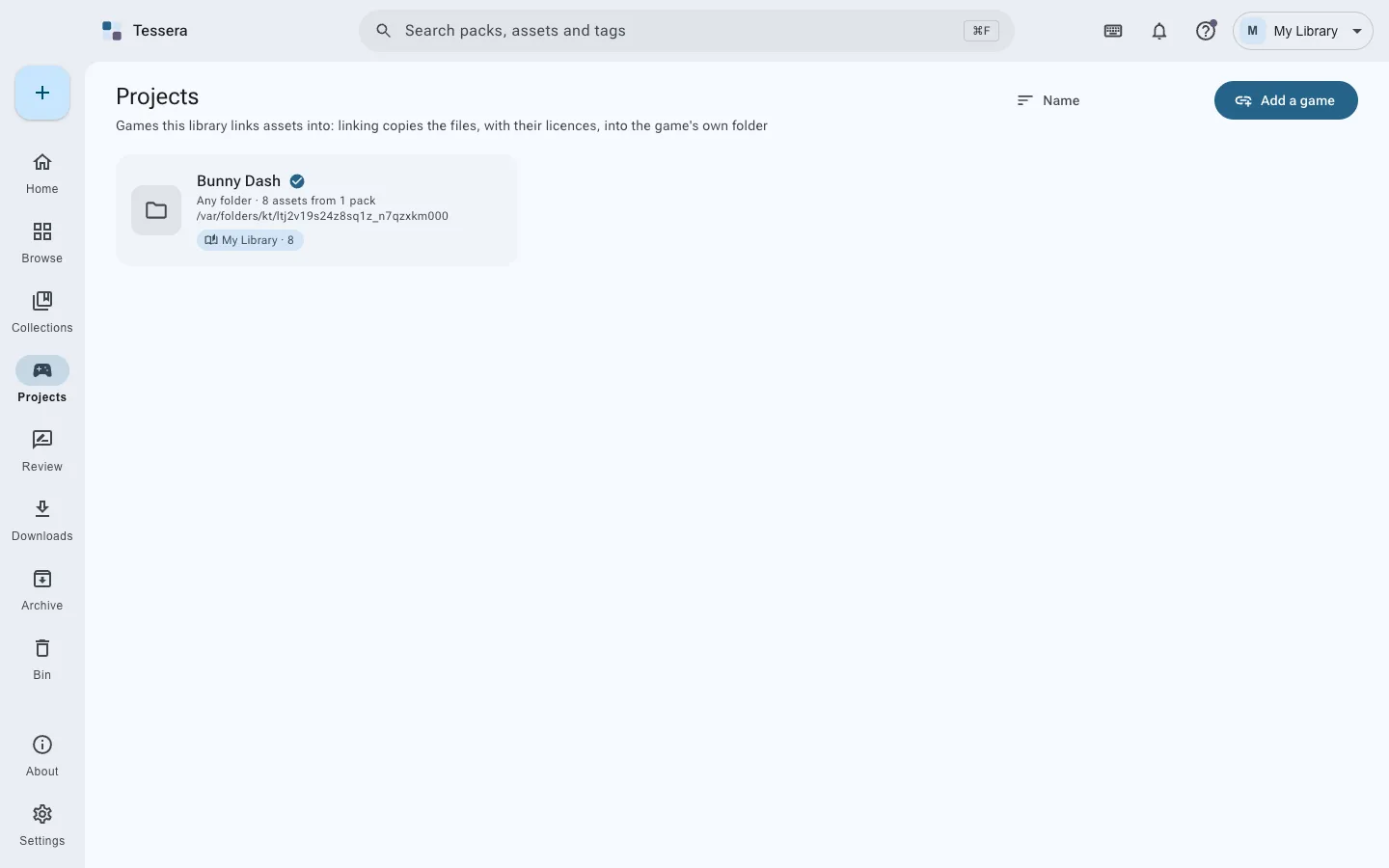
Attribution is a real obligation with a vague specification. Here is what satisfies it, what is courtesy, and how to stop writing it by hand.
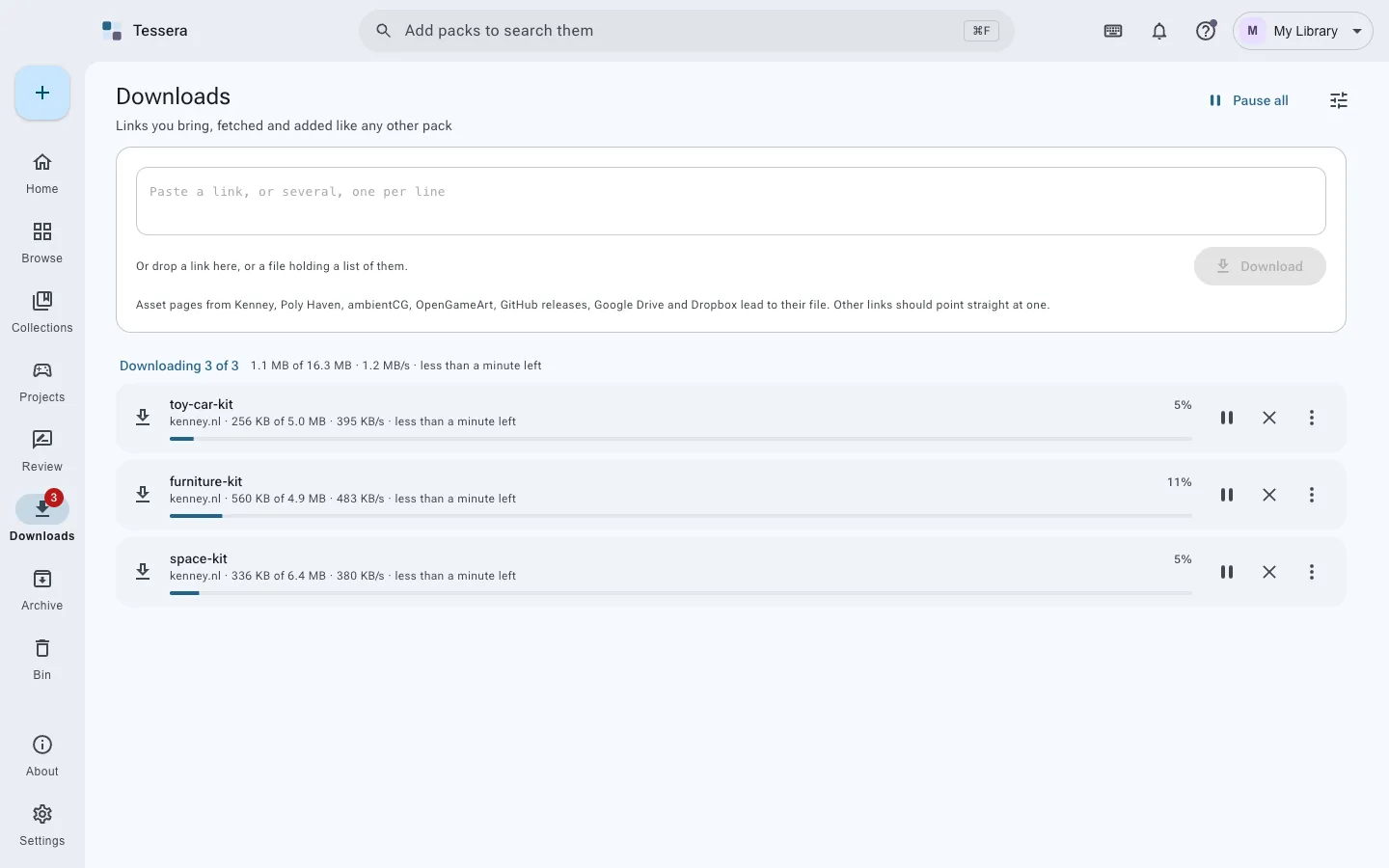
The sites worth knowing, which ones are CC0 and which are a mixed bag, and why the difference matters more than the download.
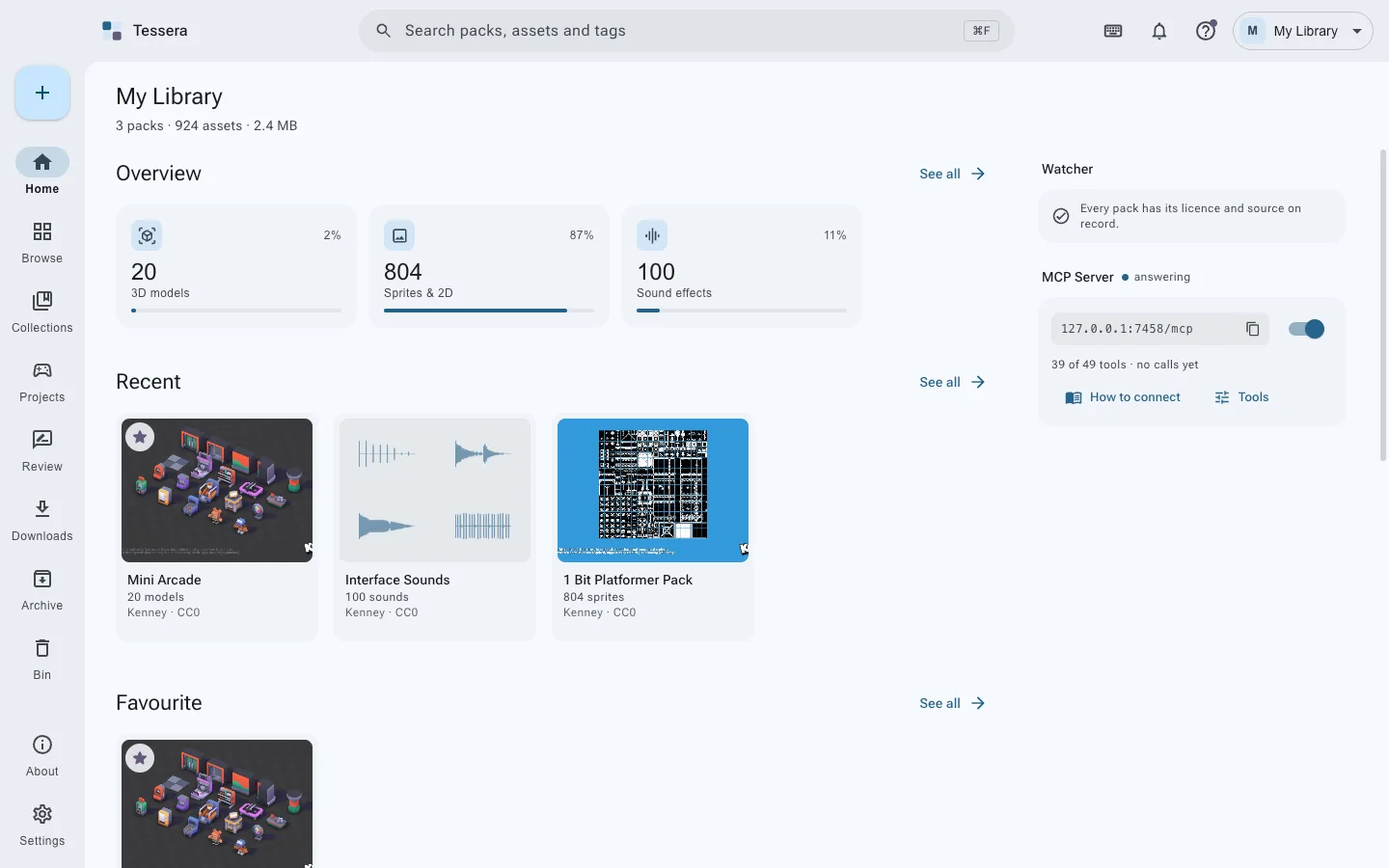
A short film of the whole thing: a pack arriving whole, a license being answered, a search across every archive, and a game getting its files with the credits written.
The licenses game assets actually arrive under, what each one asks of you, and which ones are a problem for a commercial game.
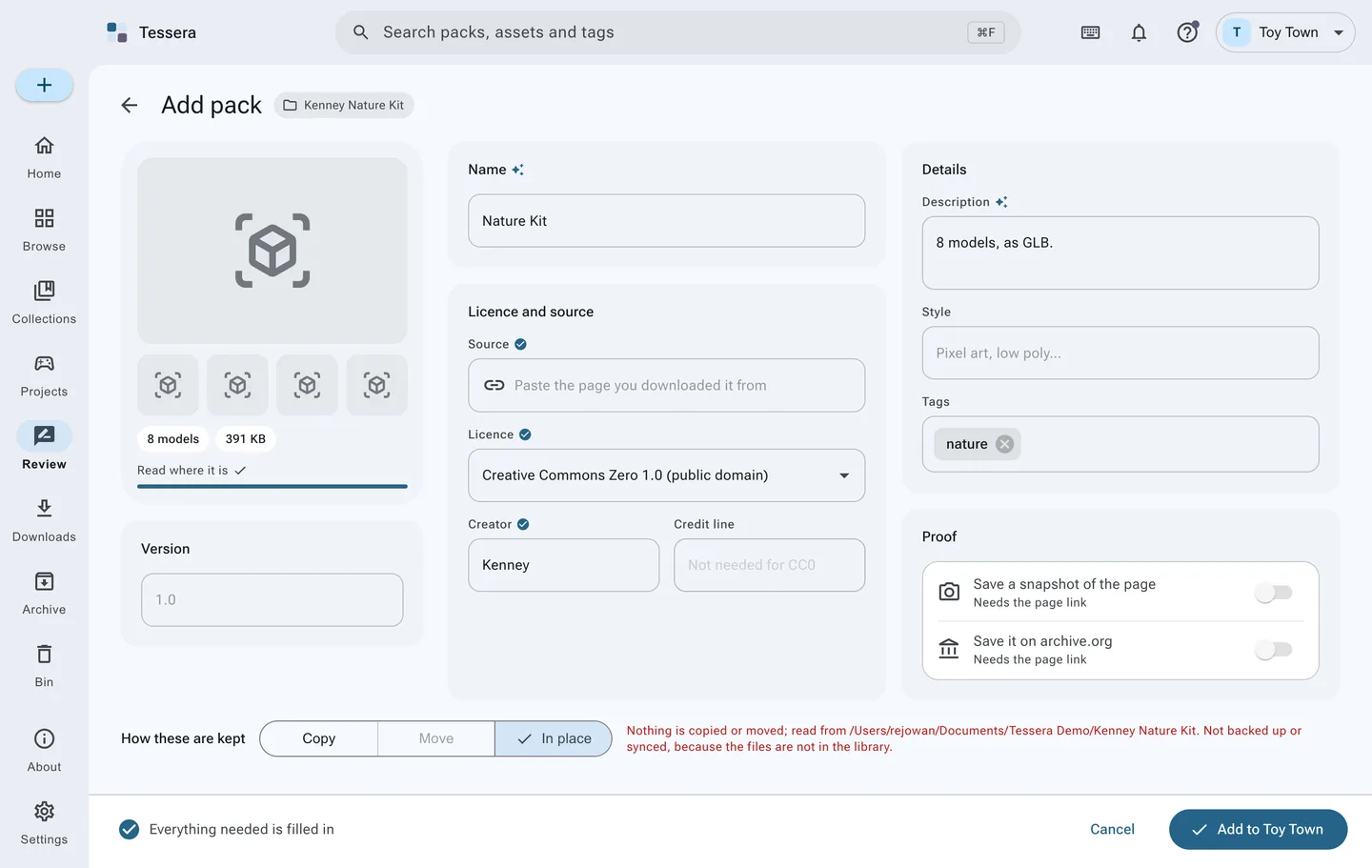
Copying an asset library into a new tool is the reason most people never start. Tessera can read your folders where they already are.
Attribution is not really a licensing problem. It is a filing problem, and it is the one a game asset library should be solving.