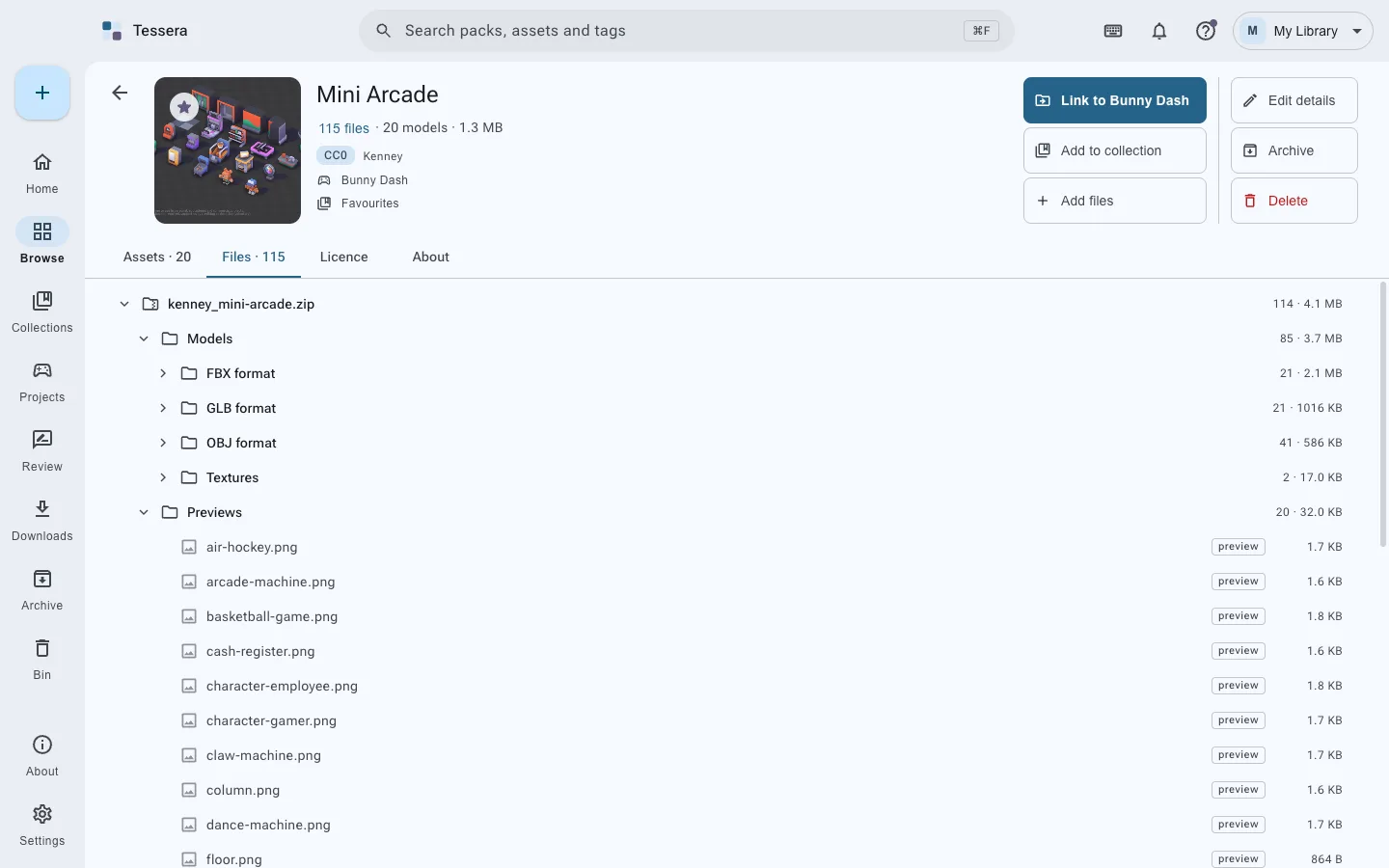
Look at your asset drive and estimate what fraction of it is still in zip files. For most people it is between a third and a half.
That fraction is, as far as your computer is concerned, empty space. Spotlight cannot see into it. Windows Search cannot see into it. Your asset manager, if you have one, almost certainly cannot either.
#The bad choices this forces
Unpack everything, and you double the disk used, destroy the packaging that documented each pack, and end up with a flat sprawl of folders that all look alike.
Unpack nothing, and you cannot find anything, so you download things you already own. This is the more common outcome and it is why bundles go unopened.
Unpack speculatively, one archive at a time, whenever you have a vague feeling something might be in there. This is the worst of both.
#Reading an archive without extracting it
A zip has an index. Listing what is inside one is cheap, and reading a single file out of it without extracting the rest is also cheap. That is enough to build a real search.
So: read every archive's contents into the index, note what each file is, generate previews from the files inside, and leave the archive exactly as it is.
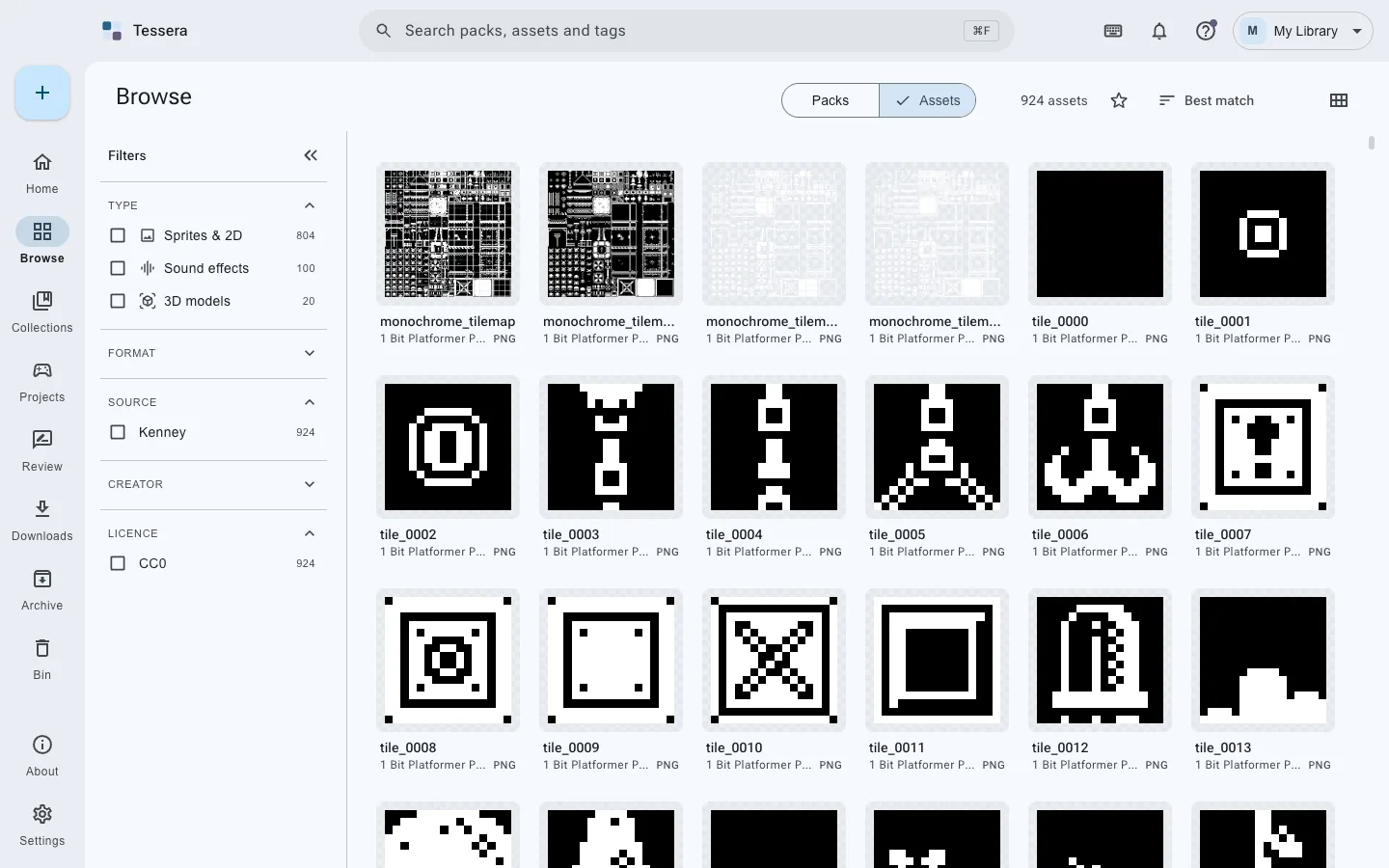
The result is that a search covers your whole library rather than the unpacked part of it. A pack still in its zip appears in results next to one you extracted two years ago, with previews, and you never had to decide in advance which archives were worth opening.
#What this changes in practice
Bundles become usable. Thirty zips you bought in a sale stop being a black box.
You stop redownloading. The question "do I already own a low-poly barrel" gets an answer in a second, which is the difference between checking and not bothering.
Packs stay whole. The readme, the license file and the folder structure the author chose are all still in the archive, so the pack keeps its documentation and its license stays attached to everything inside it.
Disk stops growing. A compressed pack that is still compressed is often less than half the size, and there is now no reason to extract it.
#The limits, honestly
An archive protected with a password cannot be read, and Tessera will say so rather than pretend. Reading many thousands of small files out of archives is slower than reading them loose, so the first index of a very large library takes a while, once, in the background.
And extraction still happens when you actually use something: copying an asset into a game pulls the real file out. The point is not that archives are never opened. It is that you no longer open them to find out what they contain.
Install Tessera, or read finding things.