A new project starts, and the first thing that happens is a browser with nine tabs of asset sites open.
This is backwards nearly every time, for a reason that is easy to miss: you are shopping because you cannot see your own inventory, not because your inventory is inadequate.
#The stock you cannot see
By the time somebody has shipped one game they typically own several thousand assets, spread across bundles, jam downloads, free packs grabbed on sight and things bought for a project that never happened.
Almost none of it is browsable. It is in archives, in folders named after the sale rather than the contents, on a second drive, and under file names chosen by twenty different people. So it is not that you looked and found nothing. You could not look.
#Shopping before looking has costs
- You buy what you have. Extremely common with bundles, where the same popular pack appears in several sales.
- The style fragments before the project has any direction, because ten new packs from ten artists is how a game ends up looking assembled.
- You spend the enthusiasm on shopping. The first day of a project has energy that is better spent on something running.
#A better first hour
Search your own library first, by what a thing is rather than by where it came from, including inside the archives you never unpacked. You will find more than you expect.
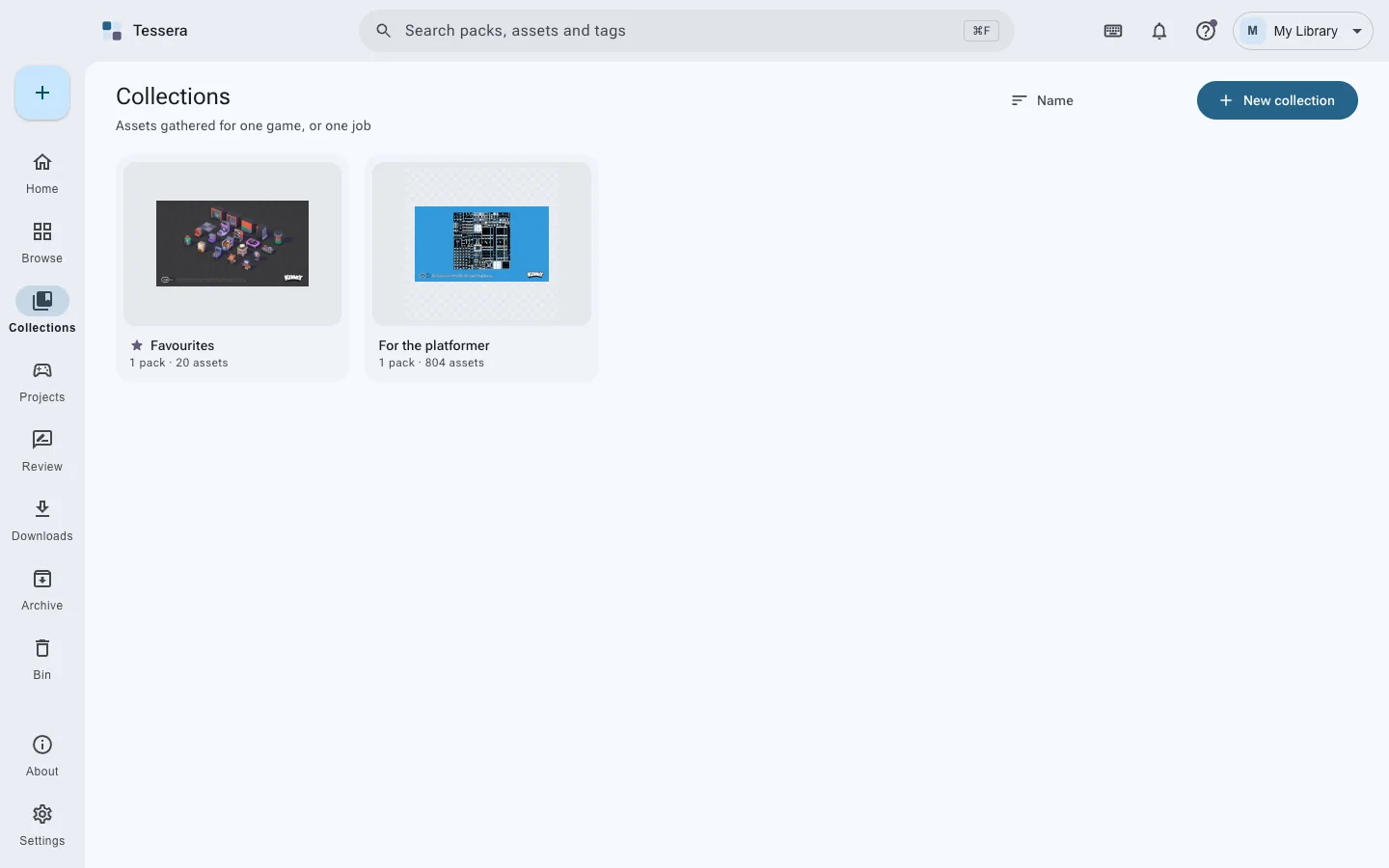
Gather candidates into a collection for this project. Not copies: a collection points at files, so putting a model in it costs nothing and changes nothing, and you can throw the whole thing away.
Then note the gaps. After an hour you have a real list of what is actually missing, which is a much better shopping list than a vague sense that you need art.
Then go shopping, for the gaps, which will be fewer and more specific than you assumed.
#Copy into the project only when you commit
Keep the collection as candidates for as long as it is useful. Copy into the game when you have decided, because that is the point at which the asset needs to exist in the project and the credits need to know about it.
Tessera copies in the format the engine prefers, brings the textures and materials the model depends on, and writes the credits file from the record as it goes. So committing to an asset is one action rather than three, and none of them is remembering to write something down.
#If the project already exists
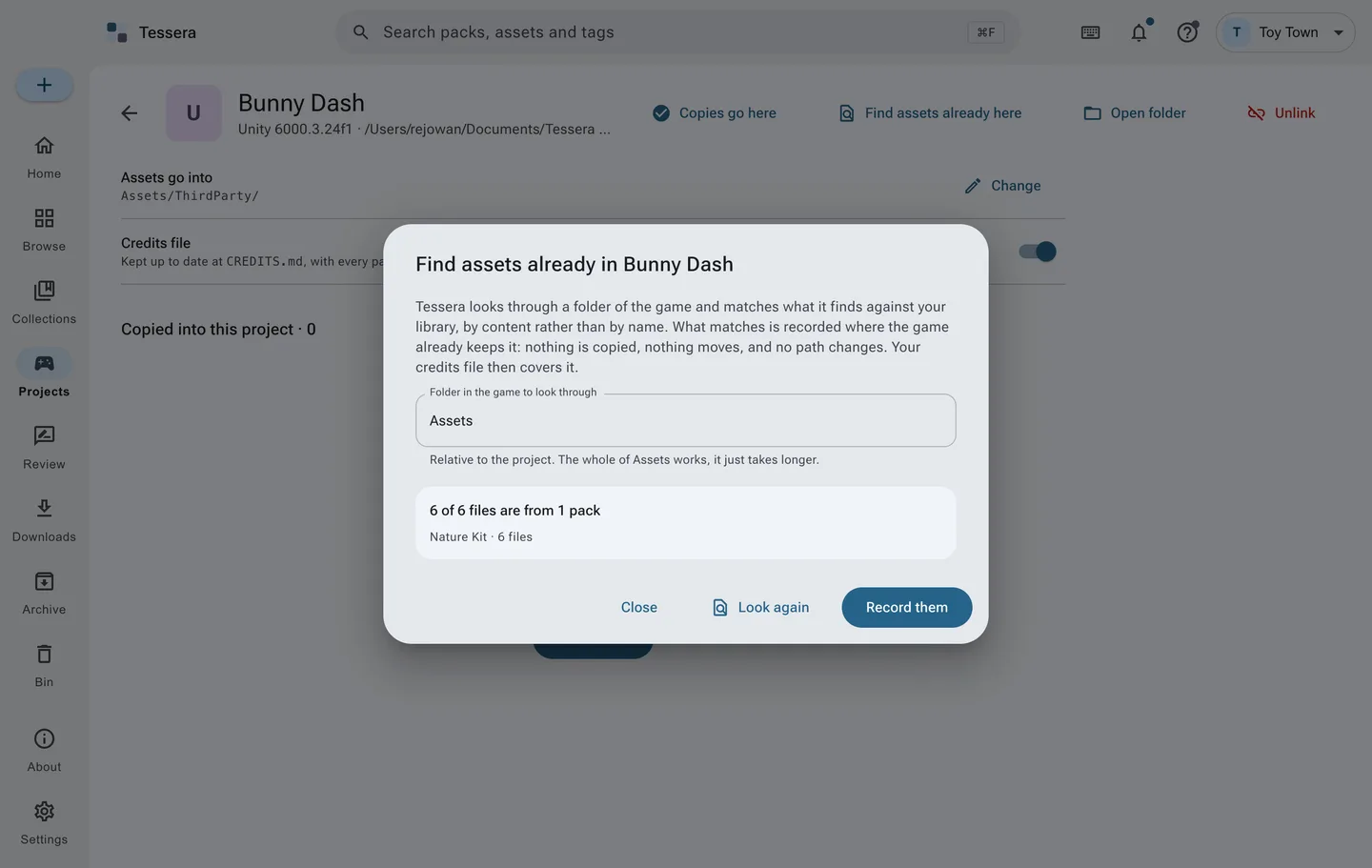
The same idea applies in reverse. A project with assets already in it can be pointed at the library and matched against it by content, so what you already shipped gets its license record without anything moving.
Install Tessera, or read collections and games and projects.