A game asset manager for Godot
One library for every pack you own, with its license recorded, and a copy into a Godot project in the format it prefers with the credits written for you.
One library for every pack you own, with its license recorded, and a copy into a Godot project in the format it prefers with the credits written for you.
Recognized by
project.godot
Assets land in
assets/third_party
Models arrive as
glTF, which Godot imports natively
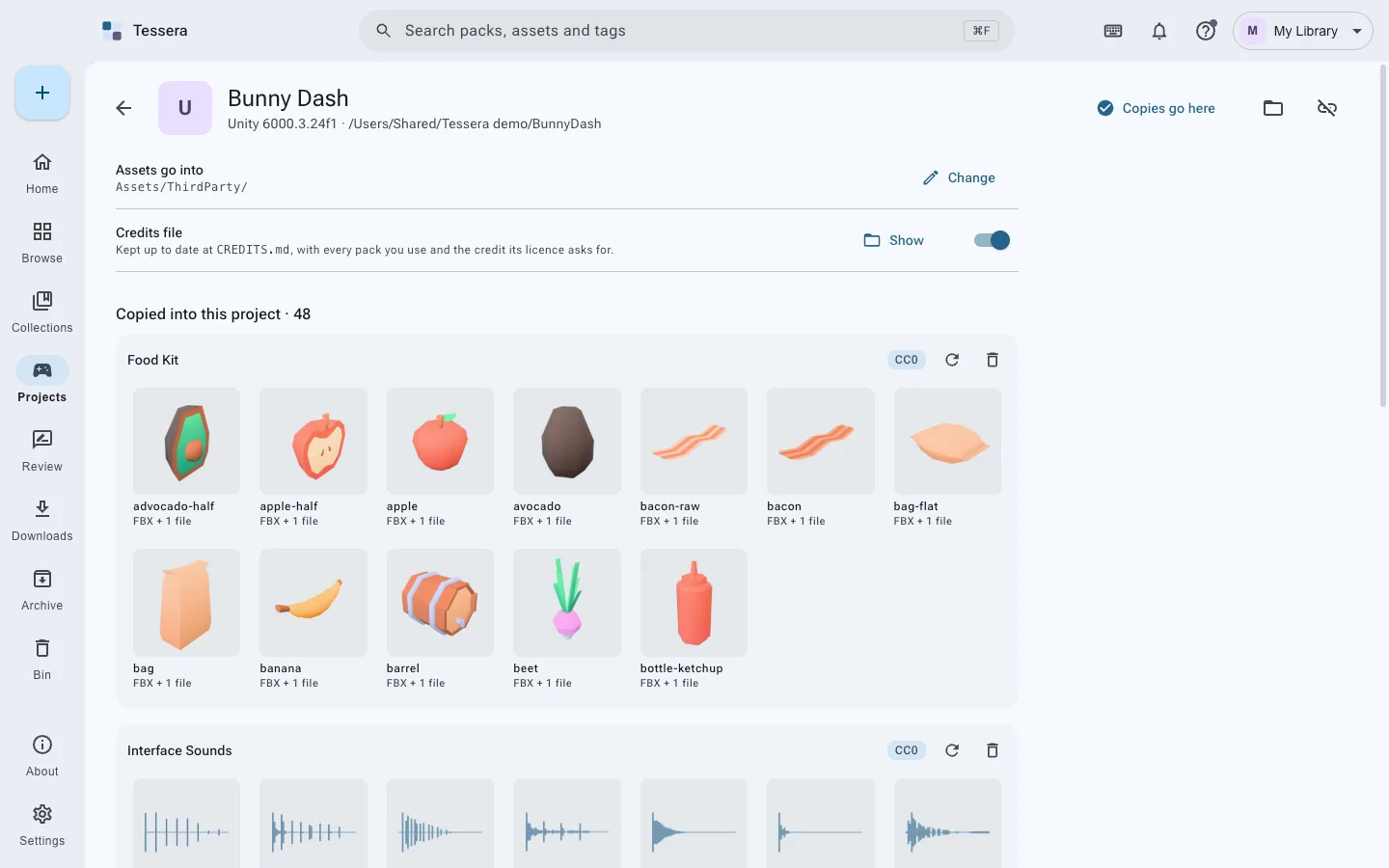
You point Tessera at the project folder once. It recognizes it by project.godot, and from then on the project has a page of its own listing everything that has been copied into it, grouped by the pack it came from.
Copying is always a real copy, never a link, so the project builds on a computer that has never heard of Tessera. Before anything is written you are shown what is going: how many assets and files, how big, and the exact folder they will land in. Assets are only ever copied into a game, never moved, because the library has to keep the pack whole for the record to mean anything.
Alongside the files it writes CREDITS.md, rebuilt from the record every time, with the packs that ask for credit first and the rest listed as thanks. You never write that file, and it is never out of date.
Most Godot projects are not new. assets is already full, scenes already point at those paths, and copying the same assets in again would give you a second copy at a new path that nothing references.
So Tessera can recognize what is already there instead. Choose Find assets already here, name a folder, and it matches what it finds against your library by content rather than by name. What matches is recorded at the path the project already uses. Nothing is copied, nothing moves, no path changes, and the credits file then covers what the game actually ships.
An asset you re-exported, edited or converted will not match, because it is no longer the file the license was recorded against. That is deliberate.
No. Tessera writes asset files into the folder you chose and nothing else. Godot imports them on its next scan and owns the .import files that result, exactly as with any file you copied in yourself.
glTF. It is what Godot imports natively and without a plugin, so it is what Tessera converts models to for a Godot project.
Yes, and it is worth committing what it writes. Alongside the assets it writes a credits file and a small manifest under .tessera, both of which are text and both of which are more useful in the repository than out of it.
No account, no server, no telemetry. The library is an ordinary folder you can read without it.
Also for Unity and Unreal Engine, and any other folder.